Thursday, January 10, 2013

#17: Camera as Enabler: Man Bites Dog (1992) and Chronicle (2012)


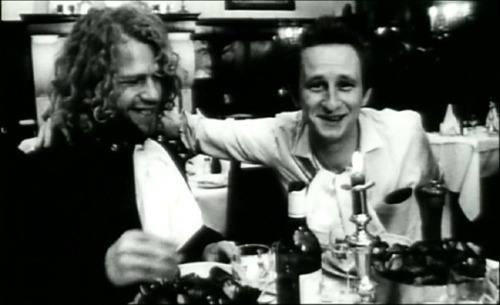
 Man Bites Dog (C'est arrivé près de chez vous, "It Happened in Your Neighborhood"), directed by and starring Rémy Belvaux, André Bonzel, and Benoît Poelvoorde; unfolds through the footage of a documentary production crew who have selected a hitman as their subject. A reason for filming gruesome murders turns into an excuse for criminal collaboration.

Chronicle, directed by Josh Trank, tells its teens-with-superpowers tale through constant obsessive or automated video documentation. The joy and troubles of newfound abilities takes an Akira-lite path towards destruction.

These are ultimately stories of villains, either sympathetic or charismatic. The camera becomes another channel of power. Recording and performing for an audience amplifies the protagonists’ control (or lack of control) over life and death. Both main characters try to turn themselves into legends, to reach beyond their lower-middle-class situation and become an “apex predator.”

Neither film is subtle, and a few jumps and plot holes are more obvious because of the films’ overall tight control. Females are simply plot devices compared to the male characters. Yet the format inherently acknowledges perspective limitations. Man Bites Dog manages to be both brutal and incisive in its shocks and whiplash morbid humor. Chronicle is notable for how it expands the “found footage” subgenre by transforming the camera into eyes, an extension of self, a witness, even a spirit medium.

“Found footage” movies ask the audience to accept that not only is the fiction on screen “reality” for the characters, but that this fiction has the appearance of fact. One could say that extreme aspects reassure the viewer that what is happening on screen is not real; of course no one dies like that, of course there are no superhuman powers from outer space. However, the movies still ask, what if it is real? What would you do?

The two films discussed here explicitly show the materials “used” for shooting — low-budget film for Man Bites Dog, digital video for Chronicle— to ground their concept. More than similar films, they activate the possibilities of their format. Through most of Chronicle, many viewers hope for the better welfare and possible redemption of the character whose often hand-held perspective guides much of the movie. Man Bites Dog implicates and horrifies both viewer and filmmaker for their fascination with the sensational. At which point will a viewer decide to tag along for the ride? At which point would a viewer step back? Either way, they’re still watching.

pic source


- - -

For further reading, check this critique of the socioeconomic dynamics in Chronicle, as well as the AV Club’s New Cult Canon post on Man Bites Dog.

ETA: A comment on the writer of Chronicle.

Sunday, December 9, 2012

#16 - 2NE1's "I Love You" MV (2012) and the films of Josef von Sternberg

Late at night, trying out different Korean music videos on cable OnDemand, I noticed something. It is not influence I'm suggesting or exemplary work I'm praising. There are simply some similarities I wanted to compare.


Solitary scenes of longing are standard fare in music videos, but the concentration of those scenes in this video reminded me of aspects of the work of director Josef von Sternberg.

The four young women that comprise the pop group 2NE1 are kept separate for much of the song; lounging, searching. Their gaze is constantly angled, examining themselves or reaching elsewhere. If they face the camera, it is rarely sustained. These looks at the camera are often partly in shadow, at a diagonal, fleeting in motion, supported by shots of other members of the group, or through a mirror; sparsely distributed through the video until they climax in raid brighter-colored montage.


Outward excess is shown through a gaze both poetic and voyeuristic. One member's dance faces an empty armchair, while another is turned inward, a personal movement. There is an audience in mind, if not present. The group's usual hypersaturated palette, and extreme assemblage of high fashion would not be out of place in the casino of The Shanghai Gesture. 


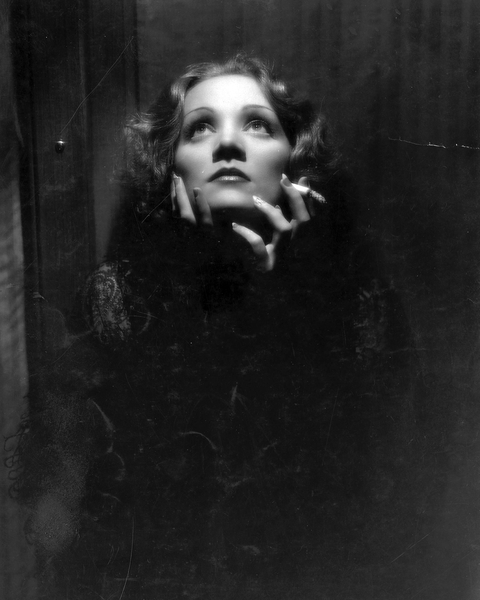
Josef von Sternberg was shameless in exploiting "foreign" stereotypes to create his idealized, often depraved, settings for desire. "I Love You" is from an Korean group and presumably filmed by an Asian director whose name I could not find. It uses many locations and objects exotic in design if not in use: the lighthouse shown below looks like a prop from a silent film, and one sensual gesture of brushing past hallway doors is quiet but memorable. 


Many of the videos of 2NE1 are designed to create glamorous, bizarre yet fun worlds for school-age through pop-loving-adult fans. Both bodies of work strive to conjure escape in flickers, to embrace opulence and ridiculousness in impermanent forms.

As stated near the beginning, the slower songs of 2NE1 and other musical acts usually feature one or more people staring, in frames easy to mold towards whatever lyrics are being sung at the moment. What struck me about this video was how it indulged in languor.

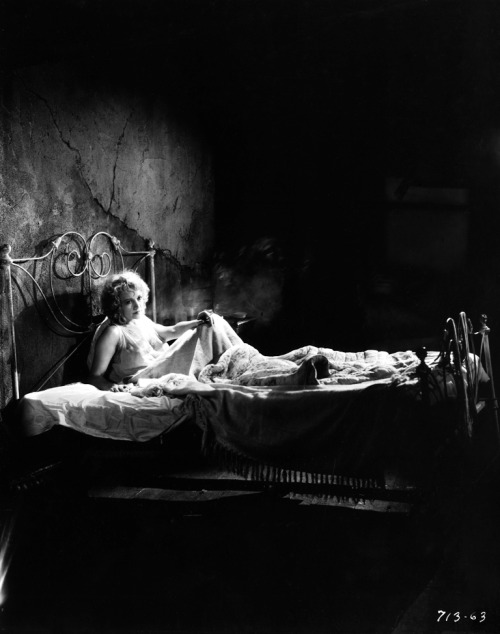
Females in von Sternberg's films often slink and recline, and even in the relatively more realist silent The Docks of New York, key moments feature the heroine lying in bed. "I Love You" has been discussed as a typical song about obsession, another trait common to characters in von Sternberg's films. The women of 2NE1 and von Sternberg's heroines are presented lingering within their emotions, unsettled even in their dream worlds, restless but held back until the right moment for the direct gaze.


Tuesday, September 18, 2012

#15: Korean Interiors: I’m a Cyborg, but That’s OK (2006) and The Housemaid (1960)


Characters in Park Chan-wook’s I’m a Cyborg, but That’s OK and Kim Ki-young’s The Housemaid (Hanyo) are confined to stylized spaces that illustrate states of mind. The comedic color film I’m a Cyborg, but That’s OK has possibilities expand through the characters’ breaks with reality, while those in the melodramatic black-and-white The Housemaid are further trapped by their extreme emotions. Both films have one moment where the reality of the situation intrudes, a critique of over-sentimentalizing mental illness (Cyborg) or acting as a voyeur (Housemaid). Cyborg or Housemaid, the lead female characters’ minds are especially powerful and, especially for the male characters in the films, impenetrable.


Sunday, April 29, 2012

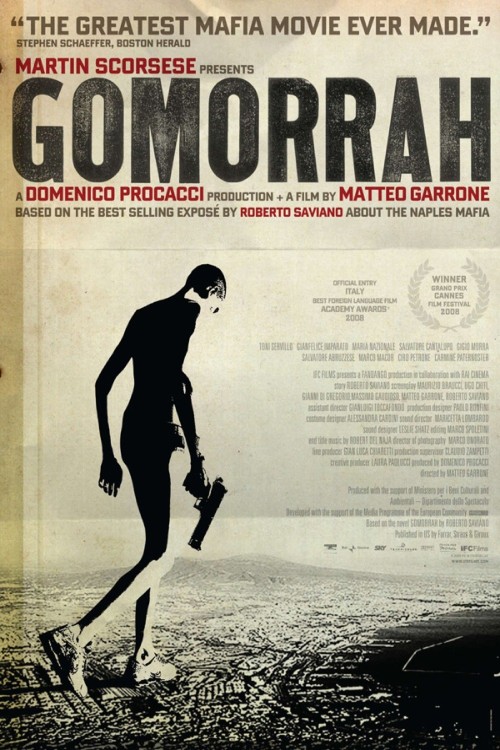
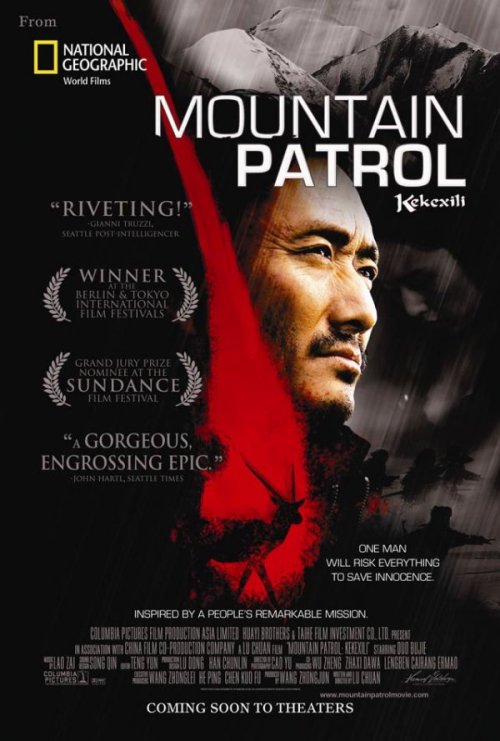
#14: The Socio-Economic Network: Kekexili: Mountain Patrol (2004) and Gommora (2008)

Investigations into economic exploitation are adapted for semi-fictional drama in Lu Chuan’s Kekexili (Mountain Patrol) and Matteo Garrone’s Gommora.


Kekexili, which depicts events in the Xinjiang Autonomous Region of Tibet, has drawn criticism for portraying the Chinese government as a benign authority. (See here and here for more information.) The director attracted similar comments of fulfilling Chinese propaganda aims with his masterful movie about the Rape of Nanking, City of Life and Death.

Roberto Saviano, the author of the vital muckraking work upon which Gommora is based, is still under police protection since publication of the book, which exposes the worldwide reach of the Camorra mafia and the stranglehold it maintains in and around Naples.


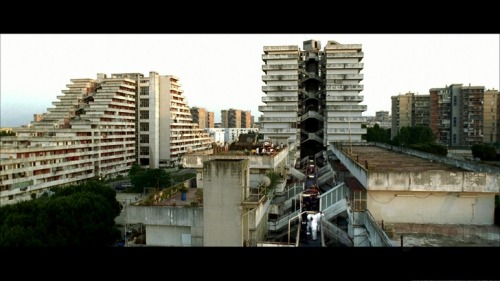
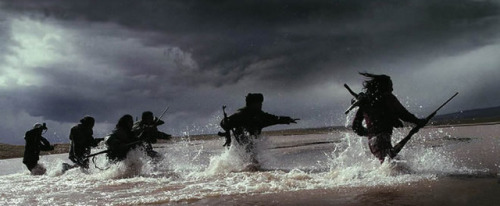
Though events in the plot may be as unforgiving as the mountainous landscape, Kekexili makes gritty heroes out of the Tibetans who give up their time and lives in order to save the Tibetan antelope from poachers. There is much less Hollywood-esque heroism in Gomorra, where the compromises and hypocrisies reach further into even the most well-intentioned person’s actions. The apartment structure at the center of the intertwining stories looms as an ominous structure of community decay.

Some have found Gomorra too bleak and overpopulated with characters to maintain interest, while one romantic subplot in Kekexili halts that film’s otherwise expert control of pace. Chuan also admitted that he could not find a satisfying answer amongst research notes and interviewees for why the protagonists are so committed to their task.


Kekexili’s cinematography brings forth all the color and majesty of the Tibetan highlands, pulling in tighter for character moments and very polished in its overall style. Gommora’s visuals tend towards desaturation in its more intimate and immediate look. The many accounts of Saviano’s book are distilled into several storylines connected by neighborhood and Camorra entanglement. A Chinese connection even appears with one clothes factory plot. “These Chinese know how to cook,” says one surprised Italian character, whose attitude towards the foreigners grows more amicable after food and work. Mealtime also establishes a deeper connection between the Chinese reporter and the Tibetan protagonists of Kekexili, but this a universal trope that can be found in films from any country.

What these films share most in common is a potent and damning critique of how increased worldwide demand for goods is met through pervasive exploitation- of Tibetans as well as the endangered antelope species in Kekexili and the people of an entire region in Gomorra. None of the characters in these films ever have the chance to witness escape from these situations, though hope may be given to the audience through post-movie research or concluding on-screen text.


Friday, January 27, 2012

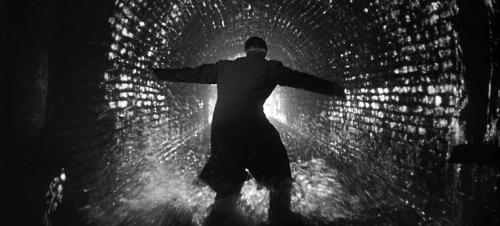
#13: Expatriate Noir: The Third Man (1949) and Night and the City (1950)

"‘Your national mind,’ said he, ‘has no eyelids. It requires a broad glare and a beaten road. It prefers shadows which you can cut out with a knife.’"
- a British diplomat's view of the United States in Henry Adams’ Democracy: An American Novel
 

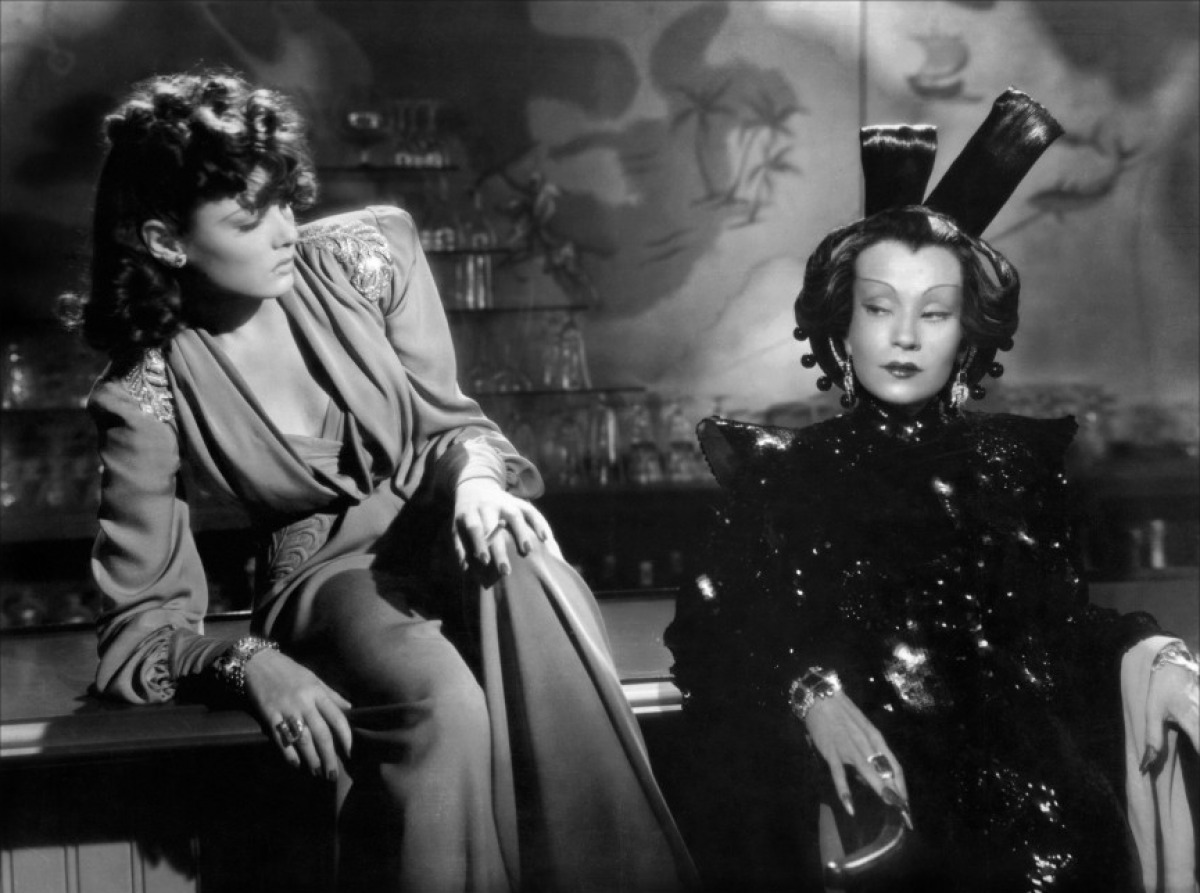
Opportunity amidst the ruins of postwar London and Vienna. Old World ideals and cowboy novel idealism are either defeated or tossed as a joke. All focus on the profiteering American. Both films lurk in cynicism, shadow, and extreme angles; up through a final chase.

Picture via.

Thursday, December 29, 2011

quick 2011 year-ender post!

I've written about my media highlights of 2011 over at Yet Another Magazine.

Tuesday, December 20, 2011

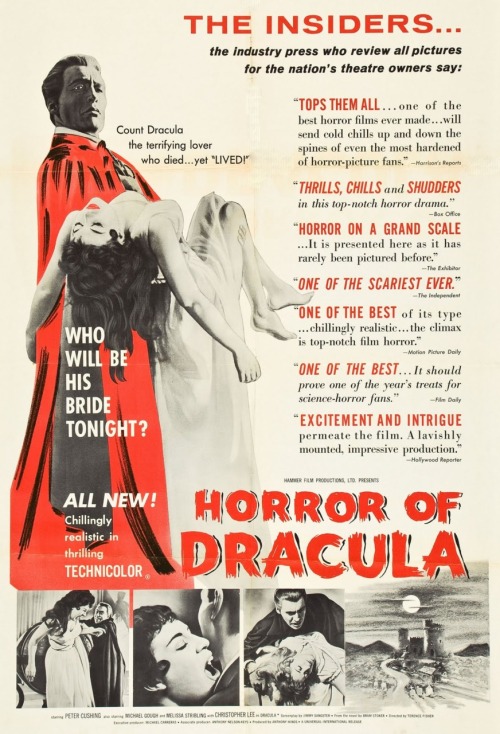
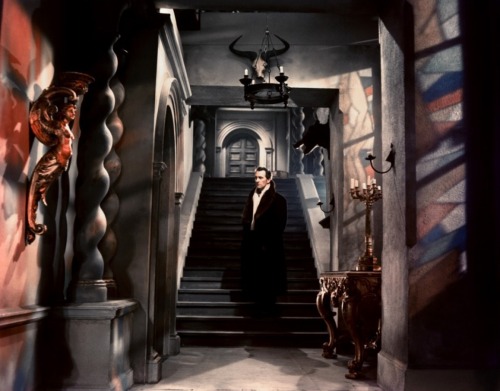
#12: Hidden Wars: Horror of Dracula (1958) and The Good, the Bad, and the Ugly (1966)


Horror of Dracula, directed by Terence Fisher; and The Good, the Bad, and the Ugly; directed by Sergio Leone; do not seem to have much in common besides violence more colorful, bloody and brutal than that shown in their genre predecessors. Yet one is a war epic where no main character fights in nor cares about war. The other film -intentionally or not- acts out tensions that could have sparked war in the time it was made.

In the The Good, the Bad, and the Ugly, the theme of civil war recurs in many character relationships. Brothers, business partners, fellow soldiers and others are divided by various interests and loyalties. There is also the actual Civil War, which rampages through the same south-western United States where our leads roam. Unlike most films set in this era, the three main characters do not belong to any side of the war. They pursue their own cons and hunts, exploiting local and state criminal laws and any other factors they encounter. The war winds in and out of the plot, saving one character from an otherwise inescapable fate, and spurring several scenes of interpersonal conflict or concern. Intensity built from personal interest and fate leads to a climactic shootout that could happen any time and any place. One look at the graveyard setting, though, shows that the film never escapes the ghost of war.

Bram Stoker’s Dracula and its many filmed adaptations begin with Jonathan Harker, an everyman real estate employee who unwittingly ends up in business with a vampire. Horror of Dracula turns Harker into a cognizant infiltrator. He poses as Count Dracula’s new personal librarian in order to fulfill a mission. While it’s amusing to think of a vampire count hiring a personal librarian (if he just wanted a warm-blooded person, he has the surrounding village to feed on), the important point is that position gets Harker within the Count’s castle walls. Who sent Harker on this undercover mission? Van Helsing, a man of science and faith, determined to fight against the godless creatures who feast on red blood. A scene with Harker’s relatives furthers the spy parallels when an official cannot reveal the true nature of a family member’s work and, to put it best, current existence status.

Agents of Dracula are hidden amongst the populace, and can turn loved ones into new recruits. Border guards are bribed and tricked in a vague Eastern European location. There is even a secondary character surnamed Marx- but while his funeral home plays an important part in the story, the character himself is just a jolly old man with dark humor. This Cold War framing does not extend to every aspect of the movie, and was probably not even a subtext intended by those who worked on the film. However, it adds a little layer of brain game to find Cold War parallels in an already entertaining horror film.

Under the surface, Horror of Dracula’s characters can be seen as agents of war between nations and ideologies. The main trio in The Good, The Bad, the Ugly dismiss that type of war. Violence is between solo fighters, inside and outside the army, and the antihero lead even calls one battle “a waste.” Dracula’s enemies fight for life and goodness, while Leone’s cowboys fight for life and gold. Both movies, however, operate on trust and free will. Whom you can trust and how long that trust can last?

Does the pursuit of a wealthy long life (or afterlife) foster personal freedom or destroy it? Is it worth the abandonment of family, or the deaths of others? Not even the unselfish Jonathan Harker escapes judgment, for while he works for the greater good, he leaves his family without a clue as to what might happen to him, and inadvertently endangers a beloved cousin. Leone’s trio are lone vagabonds with no care or nearly no care for others. There is an argument with a long-lost sibling who criticizes a main character for departing home to become a bandit. The argument brings up the needs of a group versus the needs of the individual, and it doesn’t end with complete triumph for either side.

Horror of Dracula displays excess in its bold colors (reputedly the first vampire movie to have bright red blood, and the second Hammer movie to include that feature after Curse of Frankenstein), low-cut eroticism, and the most lavish sets possible on a relatively small budget. It is traditional in all other ways, following a familiar story where good people fight one impulse-driven collective for the lives and souls of their own collective. The Good, The Bad, and the Ugly is packed with a large cast of extras and numerous locations. However, colors are dominated by blue and brown, muted by sun and dust. Flat landscapes and widespread vistas of sand eclipse all other sets. It is a long-running movie with a minimalist plot, savage and radical for the time but (with the other movies in Leone’s "Dollars Trilogy") a template for spaghetti westerns and other films to come. It is the relentless self-centeredness of the characters that give brief flickers of sympathy and partnership their grace.

Final battles, in both films, are fought over a grave- where all wars end. People in wartime, banding together and breaking apart- it is this theme these dissimilar films share.

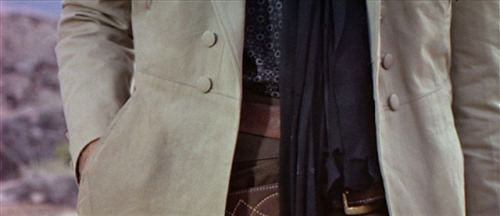
They also share a hero's outfit of coat and scarf.